Fujifilm X100VI vs GFX100 II
The GFX100 II has more resolution (102MP vs 40.2MP); the GFX100 II has stronger stabilization; the X100VI is lighter (521 g vs 1030 g); for video, the X100VI does 6.2K 30P, 4K 60P and the GFX100 II 8K 30P, 4K 60P; the X100VI launched for less ($1,599 vs $7,499). Add a third camera, or swap either one, below.
Learn each one: Fujifilm X100VI guide · Fujifilm GFX100 II guide
| Spec | 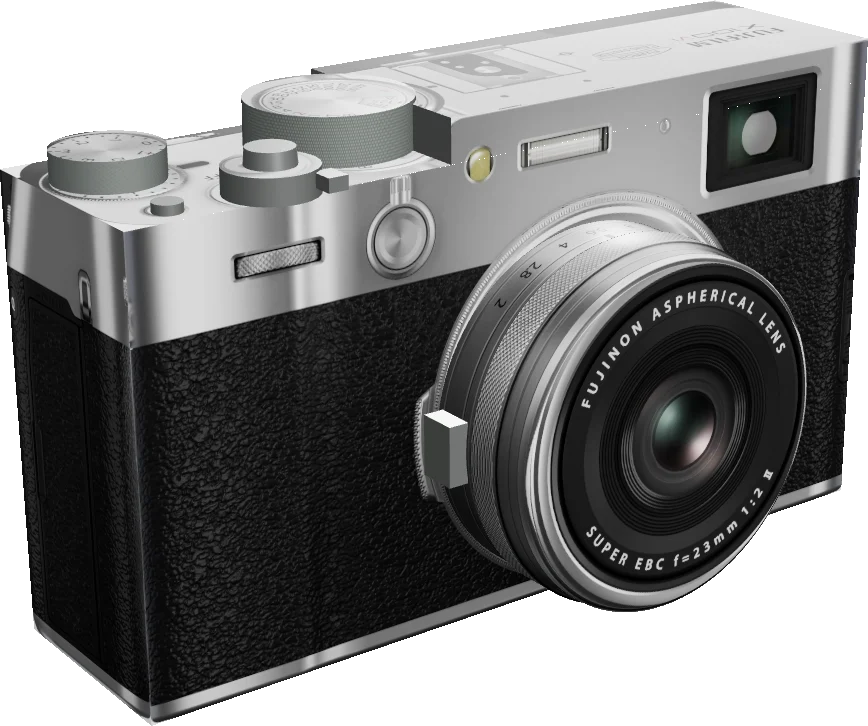 Fujifilm X100VI | 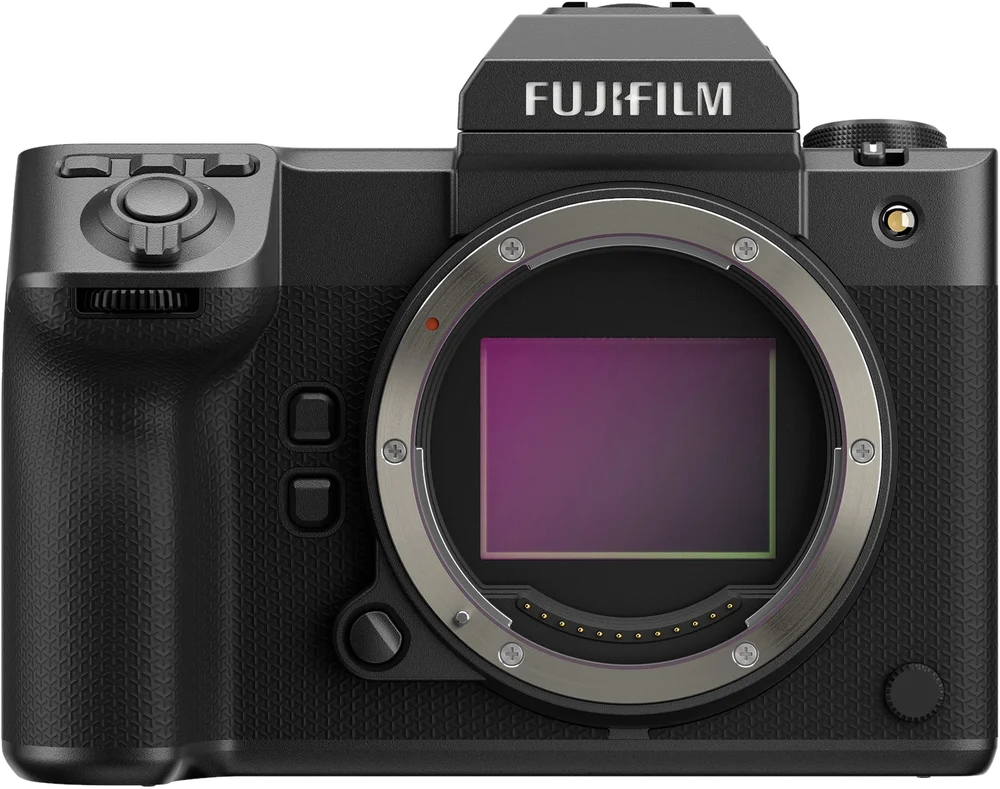 Fujifilm GFX100 II |
|---|---|---|
| Sensor and image | ||
| Sensor | X-Trans CMOS 5 HR | GFX 102MP CMOS II HS |
| Resolution | 40.2 MP | 102 MP |
| Sensor size | APS-C | Medium format (43.8 × 32.9 mm) |
| Processor | X-Processor 5 | X-Processor 5 |
| Native ISO | 125–12800 | 80–12800 |
| In-body stabilization | 6 stops | 8 stops |
| Film simulations | 20 | 20 |
| Lens and body | ||
| Lens | Fixed 23mm f/2 (35mm equivalent), built-in 4-stop ND | Interchangeable (G mount) |
| Body style | Compact, rangefinder style | SLR style, pro body with removable viewfinder |
| Top controls | ISO/shutter dial, exposure compensation dial | Mode dial, two command dials |
| Weather sealing | With adapter ring and filter | Yes |
| Weight | 521 g | 1030 g |
| Size (W × H × D) | 128 × 74.8 × 55.3 mm | 152.4 × 117.4 × 98.6 mm |
| Viewfinder and screens | ||
| Viewfinder | Hybrid optical/electronic, 3.69M-dot OLED | Electronic, 9.44M-dot OLED, 1.0×, removable |
| Rear screen | 3.0" 1.62M-dot tilting touchscreen | 3.2" 2.36M-dot 3-way tilting touchscreen |
| Top screen | No | Yes |
| Speed | ||
| Fastest mechanical shutter | 1/4000 s (leaf shutter) | 1/4000 s |
| Fastest electronic shutter | 1/180000 s | 1/16000 s |
| Burst | 11 fps mechanical, 20 fps electronic (1.29× crop) | 8 fps |
| Autofocus | Phase detection, AI subject detection (faces, eyes, animals, birds, cars, planes, trains, insects, drones) | Phase detection, AI subject detection (faces, eyes, animals, birds, cars, planes, trains, insects, drones) |
| Video | ||
| Best video | 6.2K 30P, 4K 60P | 8K 30P, 4K 60P |
| Video extras | 10-bit 4:2:2, F-Log2 | 10-bit 4:2:2, Apple ProRes, F-Log2, wired LAN |
| Storage and power | ||
| Card slots | 1 × SD (UHS-I) | CFexpress Type B + SD (UHS-II) |
| Battery | NP-W126S | NP-W235 |
| Price | ||
| Launch price (US) | $1,599 | $7,499 |
| Announced | 2024 | 2023 |
Specs from Fujifilm's published specifications. Weight includes battery and card. Prices are US launch prices; today's prices are often lower. Green marks the best value in a row where it's clear-cut.